

Electric Moped Motors 101: What Powers Your Ride and Why It Matters
If you’ve ever been stuck in traffic, watching gas prices climb while wishing you could zip past the gridlock quietly and guilt-free, you’re not alone. Many of us dream about an easier, cleaner way to get around — something fun, fast enough for city life, and without that sinking feeling of burning fuel for every errand. Electric mopeds often come up in that daydream. They look cool, they’re affordable to run, and they whisper through the streets instead of roaring. But once you start researching, one big question shows up: what actually powers these things? Understanding the motor — the heart of the moped — can make all the difference between buying a ride you love and one that leaves you frustrated halfway up a hill.
Why the Motor Matters More Than You Think
When people shop for electric mopeds, they often focus on range and speed — how far it can go and how fast it can get there. But both of those depend heavily on the motor. The motor decides how quickly your moped accelerates, how it handles hills, and even how efficiently it uses energy from the battery.
Think of the motor as the soul of the bike. It translates stored electrical energy into motion — the part that actually moves you forward. A weak or poorly matched motor can make even a high-quality battery feel disappointing. A well-tuned one, on the other hand, can make you fall in love with every twist of the throttle.
The motor isn’t just about numbers on a spec sheet. It’s about feel — that smooth push when you start moving, the quiet hum that makes city riding peaceful, and the confidence you get knowing it’ll climb a steep street without gasping for power.
The Basics: How Electric Moped Motors Work
At its simplest, an electric motor converts electrical energy from the battery into mechanical energy that turns the wheels. It uses electromagnetic fields to spin a rotor inside a stator, and that spinning motion creates the torque that drives the moped forward.
The entire process is astonishingly efficient. While a traditional gas engine wastes a huge portion of its energy as heat, electric motors can convert over 85% of their input energy into actual movement. That’s one of the biggest reasons electric mopeds feel so instant — there’s almost no lag between twisting the throttle and feeling the response.
The motor is also responsible for regenerative braking on some mopeds, which sends a bit of energy back into the battery whenever you slow down. Not every model has this feature, but when it does, you can feel it helping you squeeze a few extra miles of range from every charge.
Hub Motors vs. Mid-Drive Motors
Most electric mopeds use one of two motor configurations: hub motors or mid-drive motors. Understanding the difference can help you figure out which setup suits your riding style and environment.
Hub Motors
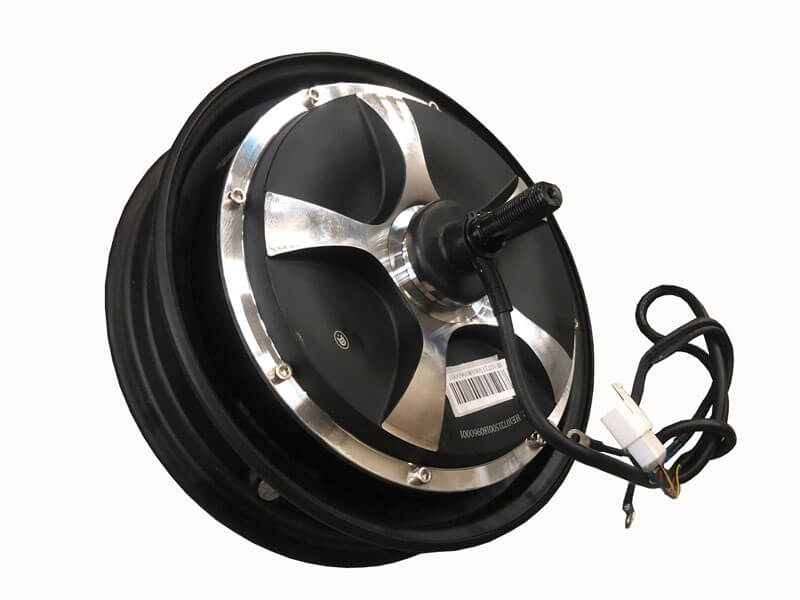
Hub motors are built right into the wheel — usually the rear one. This design keeps things simple and clean since there’s no chain or belt connecting the motor to the wheel. Hub motors are known for being quiet, low-maintenance, and efficient for flat terrain. They’re perfect for city commuting, where stop-and-go traffic and short trips dominate your routine.
The downside? They can struggle a bit with steep hills because they don’t take advantage of gear ratios. The power is direct — great for simplicity, but not always for torque. Still, for most urban riders, the convenience and low upkeep of hub motors make them an easy favorite.
Mid-Drive Motors
Mid-drive motors sit near the center of the moped and send power to the rear wheel through a chain or belt. Because they use the moped’s existing gearing, they can produce more torque and handle hills with ease. If you live in a hilly area or want a sportier, more responsive ride, mid-drive motors feel more natural.
They do, however, require more maintenance and tend to be pricier. The trade-off is control — mid-drive motors feel balanced and connected, almost like you’re part of the machine rather than just sitting on it.
Motor Power: What Those Watts Really Mean
When you’re reading specs, you’ll see motor power rated in watts (W). The wattage tells you how much energy the motor can handle, but it doesn’t always translate directly to speed. It’s more about how quickly and efficiently the moped can accelerate and maintain its pace.
- 250–500W: Light urban use, ideal for flat city streets and shorter commutes.
- 750–1000W: More versatile, capable of handling mild hills and heavier riders without losing speed.
- 1500W and above: Strong acceleration, solid hill-climbing ability, and higher top speeds.
One thing that often surprises new riders is how a higher wattage doesn’t automatically mean “better.” A 1000W motor with poor efficiency can perform worse than a well-designed 750W motor. Balance between motor power, controller tuning, and battery quality makes the real difference.
Torque: The Secret Ingredient Behind That “Wow” Feeling
If wattage is about overall power, torque is about how that power feels. Torque is measured in Newton-meters (Nm) and represents the motor’s twisting force — the thing that gets you moving from a stoplight or helps you conquer a steep road without hesitation.

A motor with high torque gives you instant pull, while one with low torque might feel sluggish at takeoff. Riders who value smooth acceleration and hill-climbing ability should pay close attention to torque ratings. It’s the unsung hero of every satisfying electric ride.
Cooling and Efficiency: Keeping the Heart of Your Moped Happy
Electric motors can get hot, especially during long climbs or in hot weather. Quality mopeds are designed to manage heat efficiently through air cooling or, in some high-end designs, liquid cooling. Overheating doesn’t just hurt performance — it can shorten the motor’s lifespan.
Efficient cooling systems keep the motor operating smoothly and maintain steady performance over time. The less heat that builds up, the longer your motor and internal components will last.
Efficiency is another big factor. A motor that wastes less energy as heat will give you better range. Two mopeds might have the same battery size, but the one with the more efficient motor will always take you farther.
Noise and Vibration: The Quiet Joy of Electric Motion
One of the best things about riding an electric moped is the silence. That near-silent glide through the streets isn’t just cool — it’s part of what makes the experience feel futuristic. The motor design plays a big role in this.
Hub motors are typically quieter since they have fewer moving parts. Mid-drive motors can produce a bit more mechanical sound due to the chain or belt system, but it’s still far quieter than a gas engine. Quality engineering also affects vibration levels — less vibration means a smoother, more comfortable ride and less fatigue during longer trips.
Maintenance: Why Motor Type Affects Your To-Do List
Hub motors are practically maintenance-free. Since they’re sealed units, there’s little to clean or adjust. You just keep your tires inflated, check your brakes, and charge your battery.
Mid-drive motors, being more complex, require occasional chain or belt maintenance. It’s not difficult, but it’s something to keep in mind if you prefer a “set it and forget it” lifestyle. The payoff, of course, is better performance and control, especially if you ride in mixed terrain.
Matching the Motor to Your Lifestyle
Choosing the right motor isn’t about chasing the biggest numbers — it’s about matching the motor to how and where you ride.
If your commute is mostly flat and you love the simplicity of hopping on and going, a hub motor setup will make your life easier. You’ll enjoy silent running, minimal upkeep, and efficient energy use.
If your routes include steep inclines, longer rides, or you crave that responsive, “connected” riding feel, a mid-drive motor delivers that sense of control and muscle. It’s the kind of ride that feels like an extension of your own effort.
Either way, the goal is the same: finding the balance between performance, comfort, and reliability.
The Future of Electric Moped Motors
Motor technology keeps getting smarter. Manufacturers are experimenting with better heat management, improved torque sensors, and even adaptive systems that automatically adjust motor output to match riding conditions. These upgrades aren’t just about speed — they make the ride smoother, safer, and more energy-efficient.
There’s also a growing focus on sustainability in motor manufacturing. Some companies are moving toward recyclable materials and production methods that reduce waste. Since electric mopeds already cut emissions dramatically, improving how motors are built makes the whole ecosystem greener.
Wrapping It Up
Understanding your electric moped’s motor isn’t just a technical curiosity — it’s the key to enjoying every ride to the fullest. The right motor gives you confidence, comfort, and efficiency. It’s what separates a moped that feels like a tool from one that feels like freedom on two wheels.
Before you hit that “buy” button, think about where you’ll ride, how you like to ride, and what kind of experience you want from your daily trips. Once you find the right motor match, every errand, every commute, and every weekend spin can feel like a small victory for both you and the planet.